

Cannabis and Sleep: What Does the Research Actually Show?

A good night’s sleep can make a difference in nearly every part of daily life. It affects energy, concentration, mood, physical recovery, and overall well-being. Yet for many people, getting consistent, restful sleep is easier said than done. Difficulty falling asleep, waking up throughout the night, or feeling exhausted even after spending hours in bed can become frustrating patterns that affect everyday life.
As more people explore medical cannabis, sleep has become one of the most frequently discussed reasons for its use. Some patients say cannabis helps them relax, fall asleep more easily, or stay asleep longer. Others are interested in whether specific cannabinoids, such as THC, CBD, or CBN, might play a role in supporting healthier sleep habits.
But what does the research actually show? Can cannabis help with insomnia, or does it simply make people feel sleepy? Are certain cannabinoids more promising than others? And what should patients understand before considering cannabis as part of their approach to sleep?
The answers are more complicated than a simple yes or no. Research suggests cannabinoids may influence several processes related to sleep, but the results vary depending on the condition being studied, the product being used, and the individual taking it. Understanding those differences is an important first step.
Why Sleep Is So Important
Sleep is one of the body’s most important recovery processes. During sleep, the brain and body carry out functions that support memory, immune health, hormone regulation, emotional processing, and physical restoration. Consistently getting enough quality sleep can help people maintain concentration, manage stress, and feel more prepared for the demands of everyday life.
When sleep becomes disrupted, the effects can extend well beyond feeling tired the following morning. Ongoing sleep problems may contribute to difficulty concentrating, irritability, reduced productivity, and changes in mood. Poor sleep can also make it harder to manage existing health concerns, particularly chronic pain and certain mental health conditions.
Not all sleep problems are the same. Some people have difficulty falling asleep, while others fall asleep without trouble but wake repeatedly throughout the night. Some wake much earlier than intended and cannot return to sleep. Others spend what seems like enough time in bed but still feel unrested during the day.
These differences matter because the reasons behind sleep disturbances can vary considerably. Stress, medications, lifestyle habits, chronic pain, anxiety, environmental factors, and underlying medical conditions can all contribute. Finding a useful approach often begins with understanding what is interfering with sleep in the first place.
Shop
2:2:1 Sleepy Watermelon (Blissful Sleep)

Understanding Insomnia and Other Sleep Problems
Insomnia is more than an occasional restless night. It generally involves repeated difficulty falling asleep, staying asleep, or waking earlier than desired, along with daytime consequences. Chronic insomnia is typically characterized by symptoms occurring at least three nights per week for three months or longer.
Other sleep conditions can create similar frustrations but may require different approaches. Sleep apnea, restless legs syndrome, circadian rhythm disorders, and certain neurological conditions can all interfere with normal sleep patterns. Treating the symptoms without recognizing the underlying cause may leave the larger problem unresolved.
This is particularly important when considering cannabis. A product that makes someone feel relaxed or sleepy does not necessarily address the reason they are experiencing poor sleep. For example, someone whose sleep is repeatedly interrupted by untreated sleep apnea may need a different form of medical care than someone whose difficulty sleeping is closely connected to chronic pain.
For people experiencing ongoing sleep difficulties, speaking with a healthcare professional can help identify possible causes and determine whether additional evaluation is needed.
How Cannabis May Interact With Sleep
The human body has a biological system called the endocannabinoid system. It helps regulate a variety of functions, including mood, pain perception, appetite, and other processes involved in maintaining internal balance. This system includes naturally occurring compounds produced by the body, receptors that respond to those compounds, and enzymes that help regulate their activity.
Cannabis contains cannabinoids that can interact with this system. The two most widely recognized are tetrahydrocannabinol (THC) and cannabidiol (CBD), although the plant contains many other compounds that researchers continue to investigate.
THC is the primary intoxicating cannabinoid in cannabis. It can affect perception, coordination, memory, and relaxation. Some people report that THC-containing products make it easier to unwind or fall asleep. However, feeling sleepy is not necessarily the same as achieving restorative sleep, and THC can also produce unwanted effects.
CBD is non-intoxicating and interacts with the body’s systems differently from THC. Researchers are studying its potential relationship with anxiety, inflammation, pain, and sleep, but the evidence remains mixed. CBD should not automatically be considered a proven sleep aid simply because it does not produce the same intoxicating effects as THC.
Another cannabinoid receiving attention in sleep research is cannabinol (CBN). CBN is often marketed in products designed for nighttime use. Although early research and consumer interest have made it a popular subject, there is still limited high-quality clinical evidence establishing whether CBN independently improves sleep in people with insomnia.
The important takeaway is that cannabinoids do not all work the same way. Their effects may depend on the specific compound, formulation, amount, individual biology, and other medications or substances being used.
Shop
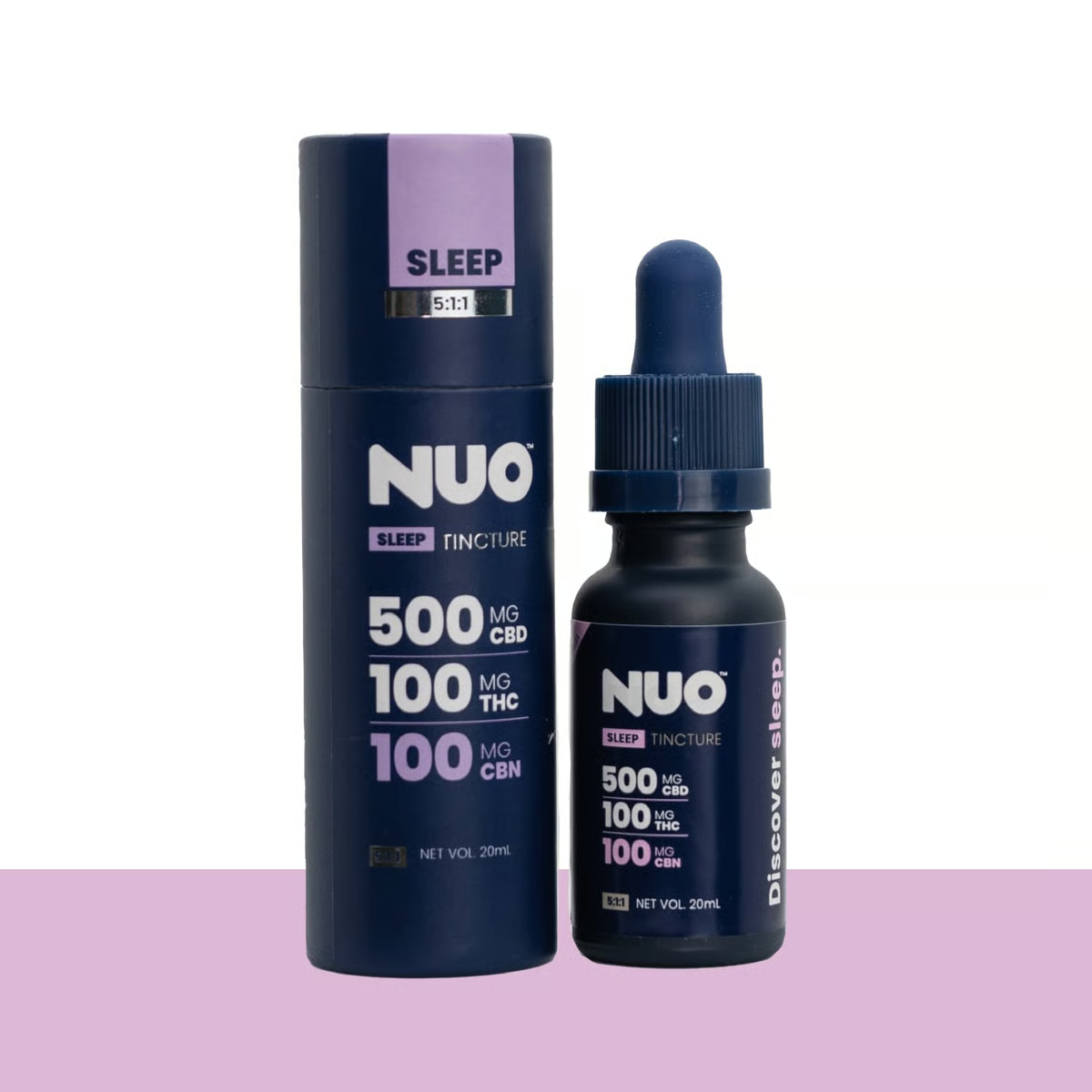
NUO | Tincture | Sleep 5:1:1
What Recent Research Says About Cannabis and Sleep
Research into cannabis and sleep has produced encouraging findings in some areas, but it has also highlighted important limitations.
One distinction is especially important: studies involving people whose sleep is disrupted by chronic pain do not necessarily tell us whether cannabis is an effective treatment for insomnia itself.
A systematic review and meta-analysis of randomized clinical trials examining medical cannabis and impaired sleep found that cannabinoids may provide small improvements in sleep quality and sleep disturbance among people living with chronic pain. In other words, when pain makes it difficult to rest, reducing some of that discomfort may help certain patients experience better sleep. However, the improvements were generally modest, and the research also identified increased risks of side effects such as dizziness, drowsiness, dry mouth, fatigue, and nausea.
This suggests that some of the sleep-related benefits reported by patients may be connected to improvements in another condition rather than a direct effect on insomnia. Someone who sleeps better because their chronic pain is more manageable is experiencing a meaningful benefit, but that does not establish cannabis as a reliable treatment for insomnia across the general population.
A more recent development came in October 2026, when the Cochrane Database of Systematic Reviews published an assessment specifically examining medical cannabis for insomnia in adults. The review included nine studies involving 537 participants. Researchers found that medical cannabis may have little to no clinically meaningful effect on sleep quality, total sleep time, or daytime functioning compared with placebo. The evidence was rated as uncertain, partly because many studies were small, relatively short, and used different cannabis formulations.
The review does not prove that cannabis cannot help anyone with sleep difficulties. Rather, it shows that the available clinical research is not strong enough to establish a dependable benefit for adults with insomnia. The authors also emphasized the need for larger, better-designed studies that examine longer-term outcomes.
Taken together, these findings reinforce the importance of looking beyond individual experiences and marketing claims. Some patients may report better sleep, particularly when managing symptoms such as chronic pain, but current evidence does not support treating cannabis as a proven solution for insomnia.
THC, CBD, and CBN: Are Some Cannabinoids Better for Sleep?
Because cannabis contains several different cannabinoids, researchers are interested in whether individual compounds may influence sleep in different ways.
THC is often associated with relaxation and drowsiness. Some people find that THC-containing products help them fall asleep, particularly when discomfort or other symptoms make it difficult to settle down. However, THC can also cause anxiety, dizziness, impaired coordination, and changes in memory or perception. Its effects on sleep quality and sleep patterns are not fully understood, and regular use may lead to tolerance or dependence in some individuals.
CBD has attracted attention because of its possible relationship with stress, anxiety, and other factors that can interfere with sleep. However, studies have produced mixed results, and there is not enough consistent evidence to say that CBD is an effective treatment for insomnia. The effects may also depend on the amount used, the formulation, and the reason someone is having trouble sleeping.
CBN is frequently included in nighttime cannabis products, often alongside CBD or THC. It is sometimes described as a naturally sedating cannabinoid, but that description is ahead of the available evidence. Researchers still need larger, well-controlled human studies to determine whether CBN has a meaningful effect on sleep and how it compares with other cannabinoids.
Patients should be cautious about assuming that a product labeled for sleep has been clinically proven to improve sleep. Product names and marketing language are not substitutes for controlled research.
Cannabis, Sleep Cycles, and Long-Term Use
Sleep is not simply a matter of falling asleep and remaining unconscious until morning. Healthy sleep involves several stages that repeat throughout the night, including non-rapid eye movement (NREM) sleep and rapid eye movement (REM) sleep.
These stages serve different functions. Deep NREM sleep is associated with physical restoration, while REM sleep plays an important role in memory, learning, and emotional processing.
Researchers have investigated whether THC and other cannabinoids influence the amount of time people spend in different sleep stages. Some studies suggest cannabinoids may affect sleep architecture, but findings have been inconsistent. The effects may also change with repeated use.
One concern is tolerance. With regular exposure, some people may find that the effects they initially experienced become less noticeable. This can lead to changes in use patterns and may increase the risk of dependence.
Sleep can also become disrupted when someone who regularly uses THC stops or significantly reduces their consumption. Some people experience difficulty falling asleep, vivid dreams, irritability, or restlessness during withdrawal. These symptoms can make it difficult to determine whether cannabis is improving sleep over time or temporarily changing the way someone experiences sleep.
This is another reason why long-term research is important. A product that seems helpful over a short period may not produce the same results with ongoing use.
Potential Risks and Side Effects to Consider
Like other substances that affect the nervous system, cannabis can produce unwanted effects. The likelihood and severity can vary depending on the cannabinoid profile, THC concentration, method of consumption, frequency of use, and individual sensitivity.
THC may cause dizziness, impaired coordination, slower reaction times, anxiety, or changes in short-term memory. These effects are especially important when cannabis is used in the evening because impairment may continue into the following morning. Driving or operating equipment while impaired is unsafe.
Combining cannabis with alcohol, sleep medications, prescription pain medications, or other substances that cause drowsiness may increase impairment and other risks. CBD can also interact with certain medications, making it important to discuss cannabinoid use with a healthcare professional, particularly for people taking multiple prescriptions.
There are additional considerations for older adults, people with a history of substance use disorders, and individuals with certain psychiatric or cardiovascular conditions. Cannabis use during pregnancy or breastfeeding is also not recommended.
Another consideration is the possibility that cannabis may mask symptoms without addressing their underlying cause. Persistent sleep problems can sometimes be an early sign of a condition that deserves medical attention. Seeking an evaluation is preferable to relying on a product to manage symptoms indefinitely.
Other Ways to Support Better Sleep
Cannabis is only one part of a much larger conversation about sleep health. Many evidence-based approaches can help people improve their sleep habits and address underlying causes.
Maintaining a consistent sleep schedule is one of the simplest places to start. Going to bed and waking up at approximately the same time each day can help reinforce the body’s natural sleep-wake rhythm. Creating a comfortable bedroom environment, limiting excessive noise and light, and keeping the room at a comfortable temperature may also help.
Reducing caffeine later in the day and avoiding heavy meals close to bedtime can make it easier for some people to settle down. Limiting screen time before bed and establishing a relaxing nighttime routine may also support healthier sleep habits.
Buy Online
Shop Fort Collins

For people with chronic insomnia, cognitive behavioral therapy for insomnia (CBT-I) is an established treatment option. It focuses on the thoughts, behaviors, and habits that contribute to ongoing sleep difficulties. Unlike approaches that simply encourage someone to feel sleepy, CBT-I works to address patterns that can keep insomnia going.
A healthcare professional can help determine whether CBT-I, additional testing, medication, or another treatment approach may be appropriate.
Talking With a Healthcare Professional About Cannabis and Sleep
If you are considering cannabis because of ongoing sleep problems, an honest conversation with a healthcare professional is a good place to begin. Be prepared to discuss how long the problem has been occurring, what your sleep schedule looks like, whether pain or stress is involved, and any medications or supplements you currently take.
It may also help to keep a sleep journal. Recording when you go to bed, how often you wake up, when you get up, and how rested you feel during the day can help identify patterns. If you already use cannabis, documenting the product and timing may give your healthcare provider a clearer picture of how it relates to your sleep.
Patients should also understand the difference between regulated prescription cannabinoid medications and cannabis products sold through dispensaries. The products are not interchangeable, and research involving a standardized prescription formulation cannot automatically be applied to every retail cannabis product.
If cannabis is part of a conversation about symptom management, a healthcare professional can help evaluate potential risks, medication interactions, and other treatment options.
A More Informed Approach to Sleep
Interest in cannabis and sleep continues to grow, and researchers are learning more about how cannabinoids interact with the systems involved in rest and recovery. Some studies suggest potential benefits for people whose sleep is disrupted by chronic pain, while research specifically focused on insomnia remains uncertain.
That distinction is worth remembering. Cannabis may affect relaxation, pain perception, and sleepiness, but those effects do not necessarily translate into consistently better sleep or long-term improvement in sleep health.
For patients, the most useful approach is to look at the complete picture: what is causing the sleep problem, what treatments have been studied, what risks may be involved, and what role a healthcare professional can play in evaluating the options.
At KindCare, we believe that understanding cannabis begins with education. Whether you are exploring medical cannabis for the first time or simply looking to learn more about cannabinoids, having accurate information can help you ask better questions and make more informed decisions.
Medical Disclaimer: This article is intended for educational purposes only and is not medical advice. Cannabis is not an FDA-approved treatment for insomnia. Research is ongoing, and individual results and risks vary. Speak with a qualified healthcare professional before using cannabis or cannabinoid products for sleep, especially if you take prescription medications or have an underlying health condition.


